Candy Cane
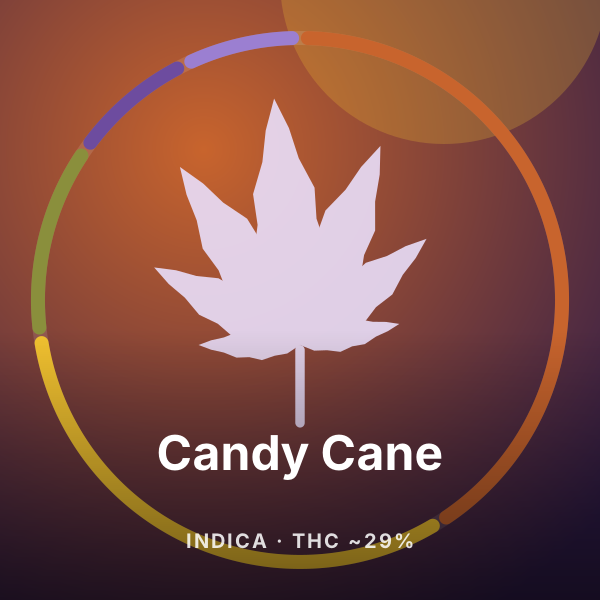
IndicaTHC range is the middle half of 11 public lab tests of Candy Cane flower (2021–2024). Source: Cannlytics lab results, CC BY 4.0.
About Candy Cane
Candy Cane is an indica. Reviews most often mention feeling sleepy, relaxed and hungry.
THC and potency
Across 11 public lab tests of Candy Cane flower between 2021 and 2024, the median result was 28.9% total THC, with half of all samples falling between 23.8% and 28.9%. CBD is typically negligible (under 0.5%). That puts it at the strong end of the market, so newer consumers should start low. Potency varies by grower and batch, so always check the label.
Aroma, flavour and terpenes
In lab tests its dominant terpene is caryophyllene, followed by limonene and humulene. Caryophyllene is known for black pepper and warm spice, while limonene adds bright citrus-peel freshness. Total terpene content measured a median of 2.1%. On the palate, people pick out mango, mint and sweet.
Reported effects
Some consumers say they reach for it when dealing with stress, insomnia and anxiety. The side effects mentioned most are dizziness, paranoia and headaches. These are personal reports, not medical advice.
Candy Cane products
Our catalogue lists 1 product made with Candy Cane, mostly other, from brands including Juicy Jay. Availability differs by state and store.
Candy Cane terpenes
Median share of flower weight in lab tests.
- pinene0.08%
- myrcene0.12%
- humulene0.18%
- limonene0.48%
- linalool0.11%
- caryophyllene0.62%
Candy Cane products
Strains similar to Candy Cane
Matched on reported effects, terpenes and type.
Candy Cane FAQ
- How strong is Candy Cane?
- In 11 public lab tests, Candy Cane flower had a median of 28.9% total THC; most samples were between 23.8% and 28.9%.
- Is Candy Cane an indica or a sativa?
- Candy Cane is generally classed as an indica.
- What does Candy Cane smell like?
- Its main terpene is pinene (pine), and people describe the flavour as mango, mint, sweet.
- Where can I buy Candy Cane?
- Our catalogue lists 1 Candy Cane products; availability varies by state and store.