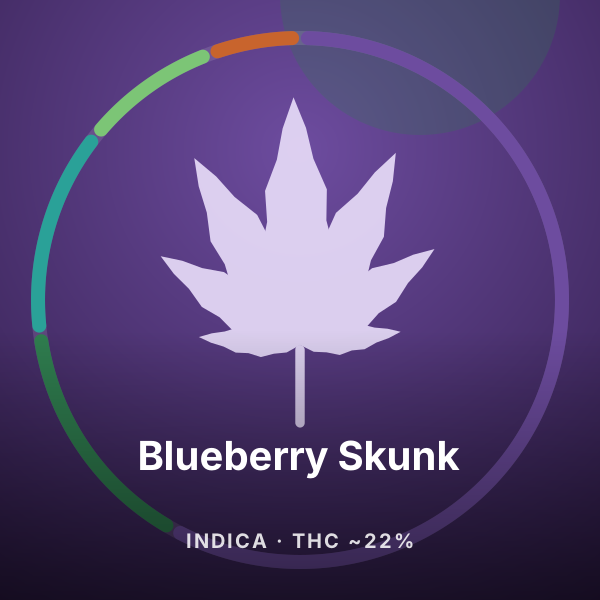
Blueberry Skunk
aka Blue Skunk, Maryhill SkunkberryIndicaTHC range is the middle half of 31 public lab tests of Blueberry Skunk flower (2020–2022). Source: Cannlytics lab results, CC BY 4.0.
About Blueberry Skunk
Blueberry Skunk is an indica. You may also see it sold as Blue Skunk, Maryhill Skunkberry. Reviews most often mention feeling euphoric, giggly and sleepy.
THC and potency
Across 31 public lab tests of Blueberry Skunk flower between 2020 and 2022, the median result was 21.7% total THC, with half of all samples falling between 19.7% and 23.3%. That is in line with most flower on dispensary shelves. Potency varies by grower and batch, so always check the label.
Aroma, flavour and terpenes
Its reported terpene profile is led by myrcene, with pinene and terpinolene. Myrcene is known for earthy, musky notes with a ripe-fruit edge, while pinene adds sharp, fresh pine. On the palate, people pick out blueberry, skunk and pungent.
Reported effects
Beyond feeling euphoric, reviewers also mention feeling relaxed and hungry. Some consumers say they reach for it when dealing with stress, pain and anxiety. The side effects mentioned most are dry mouth, dry eyes and paranoia. These are personal reports, not medical advice.
Genetics
Blueberry Skunk is also a parent of Purple Goat.
Blueberry Skunk terpenes
Relative strength as reported by consumers.
- myrceneEarthy, musky
- pinenePine
- terpinoleneFresh, herbal
- ocimeneSweet, herbal
- caryophyllenePepper, spice
- linaloolFloral, lavender
Strains similar to Blueberry Skunk
Matched on reported effects, terpenes and type.
Blueberry Skunk FAQ
- How strong is Blueberry Skunk?
- In 31 public lab tests, Blueberry Skunk flower had a median of 21.7% total THC; most samples were between 19.7% and 23.3%.
- Is Blueberry Skunk an indica or a sativa?
- Blueberry Skunk is generally classed as an indica.
- What does Blueberry Skunk smell like?
- Its main terpene is myrcene (earthy, musky), and people describe the flavour as blueberry, skunk, pungent.