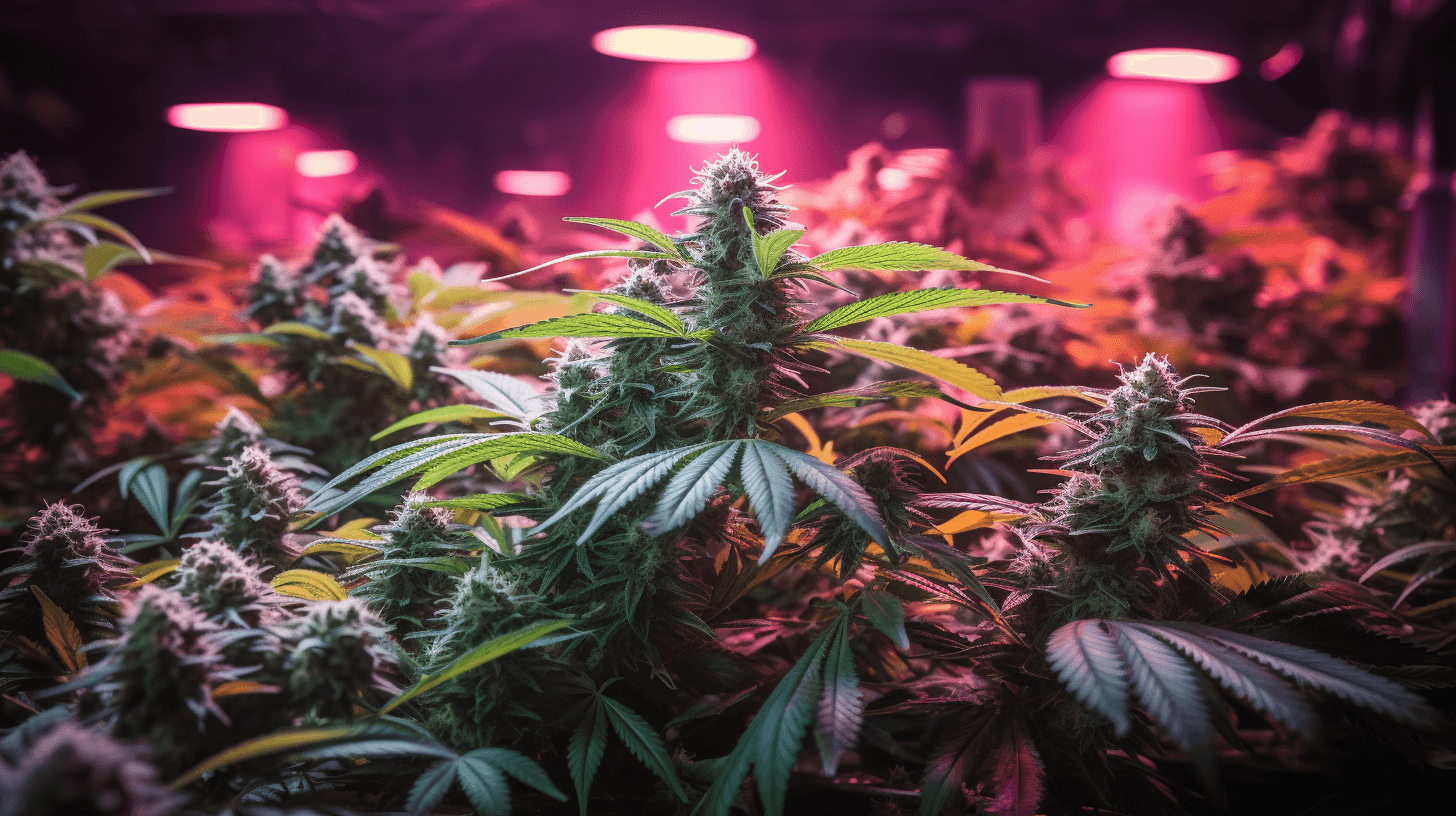
Like other plants, cannabis cannot grow without the proper lighting conditions, whether natural or artificial. Without proper lighting, cannabis growers risk reduced crop yields, poor-quality buds, and lower cannabinoids levels. In contrast, the correct lighting conditions can lead to increased cannabinoid production.
For example, one study concluded that a green or dark environment has a negative impact on cannabis growth and good-quality inflorescences compared to blue and red light, which positively affects THC accumulation and final yield. [1] Light is essential to cannabis growth and production both for commercial farmers and amatorial growers.
Why Cannabis Grow Lights?
If you choose not to use natural light to grow cannabis plants, you will need artificial cannabis grow lights. Yet, what are these lights? Cannabis grow lights are specialized artificial lights that are created to mimic the sun's natural lighting.
Typically, grow lights are used to help grow strong and healthy cannabis plants that can't get enough natural lighting, but some growers use grow lights for most of a cannabis plant's growing needs because they prefer it.
There are many different types of grow lights on the market, and each has its advantages and disadvantages, so growers must carefully analyze the options before choosing a lighting solution.
Types of Artificial Grow Lights For Cannabis
There are many kinds of cannabis grow lights, but some are more commonly used than others. As mentioned, each lighting type has its own pros and cons.
- High-pressure sodium (HPS) grow lights: Commercial cannabis farmers usually use high-pressure (HPS) grow lights. This is because this is the most powerful type of grow light and can cover larger crop areas. However HPS lighting is very energy-intensive and can become incredibly expensive. In addition, these lights have to be used in well-ventilated areas as they emit a lot of heat that could harm the final crop leading to poor yield, possible fire ignition, property damage, and safety concerns.
- Fluorescent grow lights: The most energy-efficient option for cannabis growers is fluorescent grow lights. These lights emit very little heat, meaning plants are less likely to be damaged during the various growth processes. Fluorescent grow lights are ideally suited to smaller spaces, making them less attractive to commercial growers.
- Light emitting diode (LED) grow lights: In recent years, LED grow lights have become immensely popular in the cannabis industry. This modern form of lighting technology has gained a larger use base than other lighting options because it has a longer lifespan and is more energy efficient. Depending on needs, an individual can choose between blue, red, and white colored LED grow lights. The biggest downside is that they can be expensive.
How Much Light Does Cannabis Need To Grow: Artificial And Natural
Now that you know more about the common lighting options used in the cannabis industry, it's best to learn more about how much light cannabis crops need.
According to research, the amount of light cannabis needs to grow effectively depends on its growth stage, the strain, and environmental conditions. [2]
Artificial and natural lighting can provide the necessary light, but the intensity and duration may vary. Below, we've shared a general guideline for how much light cannabis needs during its growth stages.
Germination and Seedling Stage
During a cannabis plant's germination and seedling stage, these plants require low light intensity, between 200 to 400 micromoles per square meter per second. Usually, this lighting intensity can be achieved by using LED or fluorescent grow lights that are placed about six to 12 inches above them. In addition, during these stages, lighting must be provided to cannabis plants for 18 to 24 hours daily.
Vegetative Stage
Cannabis plants need a higher lighting intensity of between 400 to 600 micromoles per square meter per second during the vegetative stage. At this stage, a grower can use the same lighting as the germination stage (LED and fluorescent grow lights), and the amount of lighting needed remains 18 to 24 hours daily.
Flowering Stage
In the flowering stage, cannabis plants require a lighting intensity of between 600 and 1000 micromoles per square meter per second. Since this intensity is quite high, most growers will use high-pressure sodium lighting during the flowering stage.
Regarding how much light cannabis plants need at this stage, it's typical for growers to apply a 12 to 12 ratio with 12 hours of light and 12 hours of darkness.
Outdoor Cultivation With Natural Light
Those who cultivate cannabis outdoors will experience a light intensity of about 1000 micromoles per square meter per second daily, depending on the climate and weather patterns in the growing area. In most instances, cannabis exposed to natural light will still thrive even on sunny days when light exceeds 1000 micromoles per square meter per second.
If cannabis is grown outdoors, it adapts to the natural light cycle. This means that as the days shorten in late summer and fall, cannabis plants will naturally transition from the vegetative to flowering stages.
However, remember that different cannabis strains may have varying light requirements and preferences. Some strains are more tolerant of lower light levels, while others thrive with higher intensity. Factors like temperature and humidity can also affect plant growth and light requirements.
Whether you choose artificial or natural lighting, monitoring your plants closely and adjusting lighting conditions based on their response to ensure optimal growth and yields is crucial.
What Is Better For Cannabis Growth: Artificial Lighting Or Natural Lighting?
Choosing artificial or natural light for cannabis growth depends on your specific situation and priorities.
Indoor cultivation often requires artificial lighting due to its control and consistency, while outdoor cultivation relies on natural sunlight.
You should consider factors such as your location, budget, security concerns, and sustainability goals when making your decision.
Artificial Lighting Benefits
- Control: Artificial lighting provides precise control over the light spectrum, intensity, and photoperiod (the duration of light exposure). This level of control allows you to optimize plant growth and tailor it to different growth stages. [3]
- Energy costs: Using artificial lighting can be expensive due to electricity costs, especially if you're using high-intensity lighting systems like high-pressure sodium (HPS) or metal halide (MH) lamps.
- Privacy and security: Growing cannabis indoors under artificial light can be more discreet and secure than relying on natural light, which can attract unwanted attention.
- Consistency: You can maintain consistent light conditions regardless of the weather or time of year. This is especially beneficial for indoor or greenhouse cultivation.
Natural Lighting Benefits
- Cost-efficiency: Natural sunlight is free, significantly reducing operational costs if you can access ample sunlight.
- Full spectrum: Natural sunlight provides a full spectrum of light that can benefit cannabis growth. However, it can also vary depending on location and weather conditions.
- Sustainability: Natural sunlight is more environmentally friendly than artificial lighting, as it reduces energy consumption.
So Which Is Better?
The answer to this question depends on each individual's cannabis growing needs. Those who prefer growing discreetly and aren't afraid of higher energy costs should consider artificial lighting solutions.
In contrast, those who want their cannabis crops to benefit from the full spectrum of natural sunlight and who want a more sustainable and environmentally friendly solution should consider natural lighting.
If neither of these lighting options seems desirable, why not try a combined approach through greenhouse cultivation? Many individual and commercial cannabis growers use greenhouses to harness the benefits of both natural and artificial lighting. This approach allows for some control while still using sunlight, potentially lowering energy costs while practicing sustainability.
Wrap-Up On Cannabis And Light – All You Need To Know
Evidently, there are three approaches to lighting solutions for cannabis crop growth. An individual can choose natural, artificial, or a combination of both. It's also clear that these lighting options have benefits that will suit different types of growers.
Armed with this knowledge surrounding cannabis lighting, individuals will have a better idea about how to approach the lighting solutions for their crops.
References:
- Magagnini, G., Grassi, G., & Kotiranta, S. (2018, June 12). The effect of light spectrum on the morphology and cannabinoid content of Cannabis Sativa L. Medical cannabis and cannabinoids. https://www.ncbi.nlm.nih.gov/pmc/articles/PMC8489345/#:~:text=They%20concluded%20that%20a%20higher,control%20treatment%20(natural%20light).
- Eichhorn Bilodeau, S., Wu, B.-S., Rufyikiri, A.-S., MacPherson, S., & Lefsrud, M. (2019, March 29). An update on plant photobiology and implications for cannabis production. Frontiers in plant science. https://www.ncbi.nlm.nih.gov/pmc/articles/PMC6455078/
- Šrajer Gajdošik, M., Vicić, A., Gvozdić, V., Galić, V., Begović, L., & Mlinarić, S. (2022, August 26). Effect of prolonged photoperiod on light-dependent photosynthetic reactions in cannabis. MDPI. https://www.mdpi.com/1422-0067/23/17/9702